



Most importers start a speaker project by picking a model from a catalogue. In our experience it works better the other way round: start with the market, then let the product follow. Here is the short version of the checklist our sales engineers use with new buyers every week.
1. Start with the retail price, not the product
Tell us what your customer will pay in the shop. A 200 USD retail speaker and a 49 USD retail speaker are two completely different engineering briefs — different amplifier class, different cabinet material, different finishing. Fixing the price band first saves weeks of back-and-forth.
2. Match the cabinet to the climate and the channel
- Hot and humid markets — plastic (ABS) cabinets resist warping and are the safer choice in coastal and tropical regions.
- Premium retail and home audio — wooden (MDF) cabinets give a warmer tone and take veneer and leather finishes beautifully.
- Outdoor, events and karaoke — look for a trolley or PA format with a heavy-duty driver and mono amplifier.
- Mobile and broadcast use — prioritise weight, battery life and a wireless microphone bundle.
3. Decide which features really sell in your market
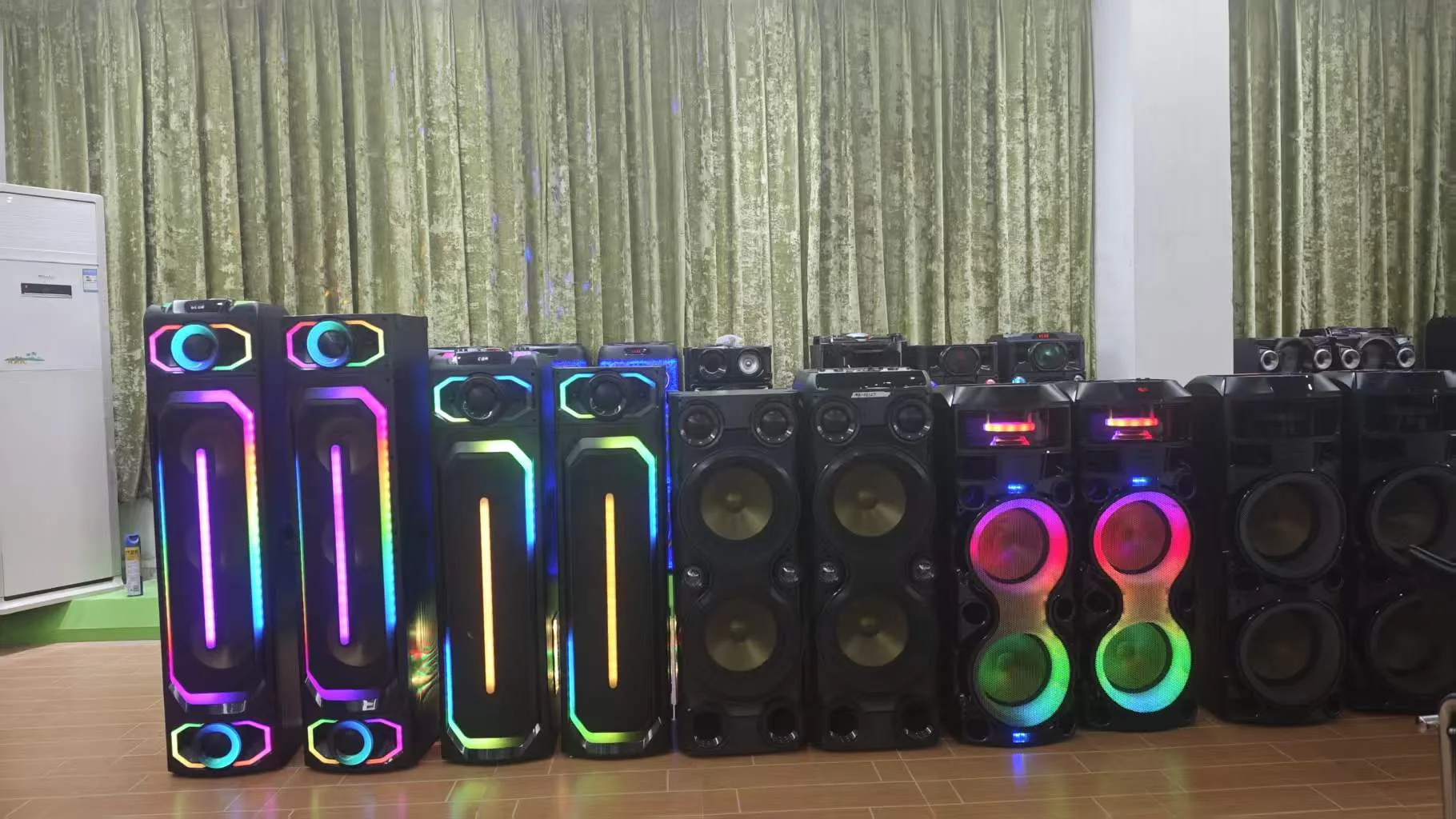
Party lighting, karaoke inputs, TWS pairing, remote control and phone app support all add cost. Some markets will pay a premium for them, others simply will not. We will tell you honestly which add-ons earn their keep in your price band.
4. Ask for the sample before the container
A specification sheet and a real sample are not the same thing. Test the sample in the environment your customers will use it — a noisy showroom hides distortion that a small shop will not.
If you send us your target price, market and volume, our engineers will come back with a concrete recommended configuration and an indicative unit price.